Top 10 Reasons Why Resin Statues Turn Yellow Over Time?

Time:2026-09-11 Author:Ethan
0%

Why do resin statues turn yellow over time? This question matters to collectors who notice amber tones spreading across a once-white figure. The change may begin around thin edges, raised details, or areas exposed to sunlight. It often looks sudden, but resin usually changes gradually.

Dr. George Wypych, a recognized polymer-weathering authority, offers a useful warning: “A polymer’s service life depends on its environment, not merely its composition.” His observation helps explain why two identical statues can age differently. One may remain bright in a shaded cabinet. Another may yellow beside a warm window.

Several causes can work together. Ultraviolet radiation can break down surface polymers. Heat can accelerate that reaction. Oxygen may contribute to oxidation. Cheap resin, unstable additives, trapped moisture, and smoking environments can worsen the appearance. Some clear coatings also darken before the resin itself changes.

This guide examines the ten most common reasons resin statues turn yellow over time. It connects visible clues with practical storage habits, cleaning choices, and display conditions. Look closely at the surface. Is the color uniform, patchy, sticky, or concentrated near joints? Those details matter.

The explanation is not always perfect. A statue may contain mixed materials, unknown pigments, or an undocumented protective coating. Even experienced restorers can misread the first symptoms. That uncertainty deserves attention. Understanding the chemistry can still prevent further damage and guide safer decisions. Small changes help. Move the statue away from direct sunlight. Keep it cool, dry, and clean. Never assume yellowing has one simple cause.
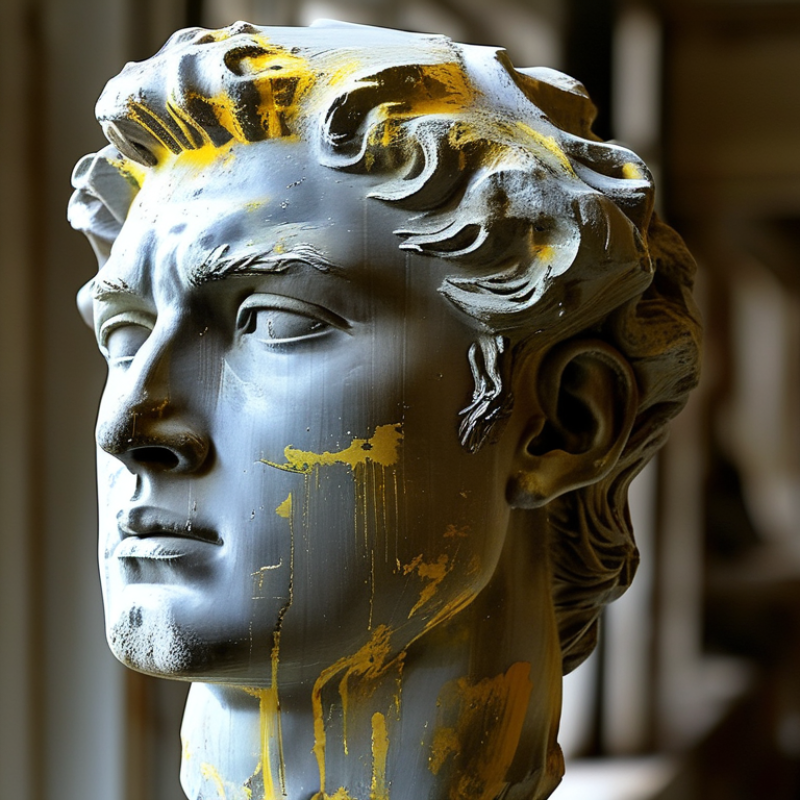
Top 10 Reasons Why Resin Statues Turn Yellow Over Time?

UV Photodegradation: ASTM G154 Uses UVA-340 Lamps at 295–365 nm

Resin statues often yellow because ultraviolet energy breaks polymer chains and changes surface chemistry. ASTM G154 uses UVA-340 fluorescent lamps covering approximately 295–365 nm, closely matching the most damaging part of natural sunlight. A common irradiance setting is 0.89 W/m²/nm at 340 nm. This concentrated exposure can reveal color changes faster than ordinary indoor lighting.

The process is not only about sunlight. Oxygen, heat, moisture, and leftover photoinitiators can accelerate oxidation. Clear resin may develop a tea-colored surface, while white resin can shift toward cream. ASTM G154 reports exposure cycles, temperature, condensation, and irradiance, but it does not convert 500 test hours into a fixed number of outdoor years. That assumption is tempting, yet unreliable.

For measurement, laboratories may use ASTM E313 to calculate a yellowness index before and after exposure. A larger index change indicates stronger discoloration. Pigments, fillers, coating thickness, and curing quality can produce very different results, even within one resin family. In practical testing, inspect edges and thin sections first; they often yellow sooner. I have found visual judgment useful, but insufficient. Camera settings can hide subtle changes. Controlled color measurements are safer.

Thermal Oxidation: How ASTM G154’s 60°C Exposure Accelerates Yellowing

Top 10 Reasons Why Resin Statues Turn Yellow Over Time?

Thermal oxidation is a major reason resin statues lose their clean color. Around 60°C, heat increases molecular movement inside the resin. Oxygen then reacts with vulnerable polymer chains and residual additives. This reaction creates yellow or brown chromophores. The surface may look slightly amber first. Later, the color can spread deeper.

ASTM G154 testing often combines fluorescent UV exposure, heat, and condensation cycles. A chamber temperature near 60°C can accelerate oxidation during these cycles. UV light breaks chemical bonds, while heat speeds the resulting reactions. Moisture may also stress coatings and expose fresh resin beneath them. However, ASTM G154 is a comparison method, not an exact outdoor-life prediction. Real results depend on resin formulation, pigments, thickness, ventilation, and storage. One detail is often overlooked.

Tips: Keep statues away from windows, radiators, and enclosed hot cabinets. Use stable indoor temperatures and avoid dark covers that trap heat. Inspect hidden areas every few months. A small color change can reveal early oxidation. Do not assume every yellow mark comes from UV exposure; plasticizers, uncured material, and surface coatings may also contribute. Gentle cleaning helps inspection, but it cannot reverse chemical yellowing.、】【

Catalyst and Hardener Residues: Amine Blush and ASTM E313 Yellow Index

Top 10 Reasons Why Resin Statues Turn Yellow Over Time?

Catalyst and Hardener Residues: Amine Blush and ASTM E313 Yellow Index

Resin statues may yellow when catalyst or hardener residues remain after casting. In epoxy systems, excess amine hardener can react with moisture and carbon dioxide. This reaction may create amine blush, a thin, waxy film on the surface. It can look cloudy, greasy, or slightly yellow under strong lighting.

It can be subtle. Incomplete mixing, incorrect ratios, and low temperatures often increase this risk. A statue may feel dry while its deeper layers remain chemically active. Heat and ultraviolet exposure can then accelerate oxidation. In my experience, polishing alone rarely fixes the cause. It may even make the surface appear more uneven.

ASTM E313 provides a Yellow Index value for measuring visual yellowness under controlled instrument conditions. The number is useful, but it is not a complete diagnosis. Testers should record the illuminant, observer setting, calibration status, and sample location. Comparing a cured sample with its original baseline gives stronger evidence. A high index may indicate residue, aging, contamination, or several causes together. That distinction requires careful inspection, not guesswork. Surface cleaning, controlled post-curing, and accurate mixing can reduce problems, but they cannot reverse every chemical change.

Moisture and Contaminants: Surface Changes Measured by ASTM D2247 Testing

Top 10 Reasons Why Resin Statues Turn Yellow Over Time?

Moisture is often the quiet trigger behind yellowing resin statues. ASTM D2247 evaluates coating and surface water resistance under a continuously condensing, 100% relative humidity environment. This does not directly measure color change. It reveals how moisture exposes weak points, including clouding, blistering, tackiness, and adhesion loss.

A humid display cabinet can trap moisture around the statue’s base, joints, or textured details. Dust, skin oils, cleaning residue, and airborne salts then stick to the softened surface. These contaminants may accelerate oxidation and create uneven amber patches. ASTM D714 provides a recognized method for rating blister size and frequency, helping technicians document moisture-related surface damage rather than relying only on photographs.

Testing should include clean and contaminated samples. That comparison matters. ASTM D2247 results can show whether humidity alone causes damage, or whether residue increases it. In practice, a warm cabinet near a window may produce harsher conditions than a stable room. Resin chemistry also varies, so one exposure period cannot predict every statue’s lifespan. That limitation deserves attention.

Measure color with a calibrated spectrophotometer when possible. Record gloss, mass, humidity, and visible defects before exposure. A small yellow shift may be missed by the eye. Repeated measurements create stronger evidence than memory. Some reports still overstate humidity as the only cause, which is an incomplete reading of the surface.

Top 10 Reasons Why Resin Statues Turn Yellow Over Time

Moisture, contaminants, light, heat, and resin aging can alter the surface appearance of cured resin. The chart shows a qualitative impact index based on established material-aging mechanisms; it is not a direct ASTM measurement or failure ranking. ASTM D2247 exposes materials to 100% relative humidity at approximately 38 °C to evaluate moisture resistance.

Interpretation: Moisture-assisted oxidation, UV exposure, heat, and surface contaminants are common contributors to yellowing. ASTM D2247 can help evaluate moisture-related surface changes, while color change should be measured separately with a colorimeter or spectrophotometer.

Resin Formulation and Storage: UV Stabilizers, Oxygen, and ASTM D4329 Aging

Top 10 Reasons Why Resin Statues Turn Yellow Over Time?

Resin yellowing often begins with the formulation, not the display shelf. Poor resin-to-hardener ratios can leave reactive compounds inside the casting. These compounds slowly react with oxygen. Heat makes the reaction faster. Even a sunny window can intensify the change.

UV stabilizers help, but they are not permanent shields. UV absorbers reduce damaging radiation, while hindered amine light stabilizers interrupt surface degradation. Their performance depends on dosage, resin chemistry, pigment loading, and processing quality. Too little protection fails early. Too much may affect curing or appearance. This balance is easy to underestimate.

Storage also matters. A statue kept near glass, heaters, or strong lamps receives repeated stress. Unsealed packaging allows oxygen and humidity to reach the surface. Dark, cool, stable storage usually slows discoloration. It does not reverse it. I have seen pale resin stay stable in a cabinet, while a similar piece yellowed beside a window.

ASTM D4329 provides a controlled method for fluorescent ultraviolet exposure and condensation testing. It helps compare materials under defined aging conditions. However, test hours do not equal exact outdoor years. Real displays involve different temperatures, dust, airflow, and lighting. That limitation deserves attention. A passing test is useful evidence, not a guarantee. Surface yellowing may also hide deeper oxidation, especially around thin edges and exposed details.

FAQS

: Why do resin statues turn yellow?

: Ultraviolet energy breaks polymer chains and changes surface chemistry. Oxygen, heat, moisture, and residual additives can accelerate yellowing. Clear resin may become tea-colored, while white resin may turn cream.

What ultraviolet range is used in accelerated testing?

ASTM G154 commonly uses UVA-340 lamps from approximately 295 to 365 nanometers. A typical setting is 0.89 W/m²/nm at 340 nanometers. This exposure reveals changes faster than normal indoor lighting.

Does 500 test hours equal several outdoor years?

No. Test hours cannot convert into fixed outdoor years. Real aging depends on temperature, airflow, moisture, dust, lighting, and resin formulation. That assumption is tempting, yet unreliable.

How does heat increase resin yellowing?

Around 60°C, molecular movement increases inside the resin. Oxygen then reacts more quickly with vulnerable chains and leftover additives. UV light starts damage, while heat speeds later reactions.

Can moisture affect discoloration?

Yes. Condensation can stress coatings and expose fresh resin underneath. Moisture may also support surface oxidation. A dry, stable display environment usually slows the process.

Do ultraviolet stabilizers prevent yellowing forever?

No. UV absorbers reduce damaging radiation, while light stabilizers interrupt surface degradation. Their performance depends on dosage, resin chemistry, pigments, and processing quality. Protection can fail early.

Where should I inspect a resin statue first?

Check thin edges, sharp details, and exposed sections first. These areas often yellow sooner. Hidden surfaces can also reveal early changes. Look every few months.

How can yellowing be measured accurately?

A laboratory may compare yellowness before and after exposure using ASTM E313. A larger index change indicates stronger discoloration. Visual inspection helps, but camera settings can hide subtle shifts.

What storage conditions slow yellowing?

Keep statues away from windows, radiators, and hot enclosed cabinets. Use cool, stable storage with limited light and airflow around the object. Avoid dark covers that trap heat.

Can cleaning reverse chemical yellowing?

Gentle cleaning can remove surface dirt and improve inspection. It cannot reverse chemical discoloration inside the resin. I may mistake early oxidation without controlled color measurements.

Conclusion

Why do resin statues turn yellow over time? The main causes are ultraviolet exposure, heat, oxidation, chemical residues, moisture, and the natural aging of the resin itself. Under UVA radiation, especially wavelengths around 295–365 nm, the resin’s molecular structure can break down and form yellow-colored compounds. ASTM G154 testing uses UVA-340 lamps to simulate this effect, while its elevated exposure temperature, commonly around 60°C, can accelerate thermal oxidation and make discoloration appear more quickly.

Yellowing may also result from leftover amines, hardeners, or other curing by-products on or within the surface. These changes can be evaluated through color measurements such as the ASTM E313 Yellow Index. Moisture and airborne contaminants may create additional surface changes, which can be studied using ASTM D2247 humidity testing. Finally, resin formulation, insufficient UV stabilizers, oxygen exposure, and poor storage conditions all influence long-term color stability. Controlled indoor storage, limited sunlight, moderate temperatures, and clean, dry surroundings can help slow the aging process.

Ethan

Ethan

Ethan is a seasoned marketing professional with a deep expertise in our company's innovative product line. With a passion for sharing knowledge and insights, he takes the lead in regularly updating our corporate blog, where he explores industry trends, product features, and effective marketing......