What are the safety standards for theme park statues? The answer depends on the statue’s design, location, and visitor interaction. A small fiberglass figure needs different controls from a twelve-meter animatronic structure. Both require documented safety decisions.
Industry guidance provides a useful starting point. ASTM Committee F24 develops standards for amusement rides and devices, including design reviews, inspections, maintenance, and operational controls. EN 13814 also addresses the safety of amusement devices and structures in Europe. These standards do not replace local building, fire, electrical, or accessibility requirements. They create a framework for managing foreseeable risks.
Scale matters greatly. The TEA/AECOM Theme Index reports that major theme parks attract millions of visitors annually. Even a low-probability failure can affect many people. IAAPA safety guidance therefore emphasizes layered protection, trained staff, inspection routines, and clear emergency procedures. A statue should resist expected wind, vibration, impact, climbing, and crowd pressure. Its anchors, welds, panels, coatings, and internal wiring need professional review.
Details matter. A loose handrail, sharp costume edge, hot lamp housing, or slippery platform can create immediate danger. Moving eyes or arms require guarded mechanisms and emergency stops. Electrical systems need suitable enclosures and documented testing. Fire-resistant materials may be essential indoors.
Not every statue is technically a ride. That distinction can cause confusion. Yet visitors may still climb, touch, lean, or gather around it. Effective safety planning must reflect real behavior, not ideal behavior. Operators should record inspections, repairs, incidents, and design changes. Standards help, but judgment remains necessary. A beautiful structure is never finished when its risks are poorly understood.
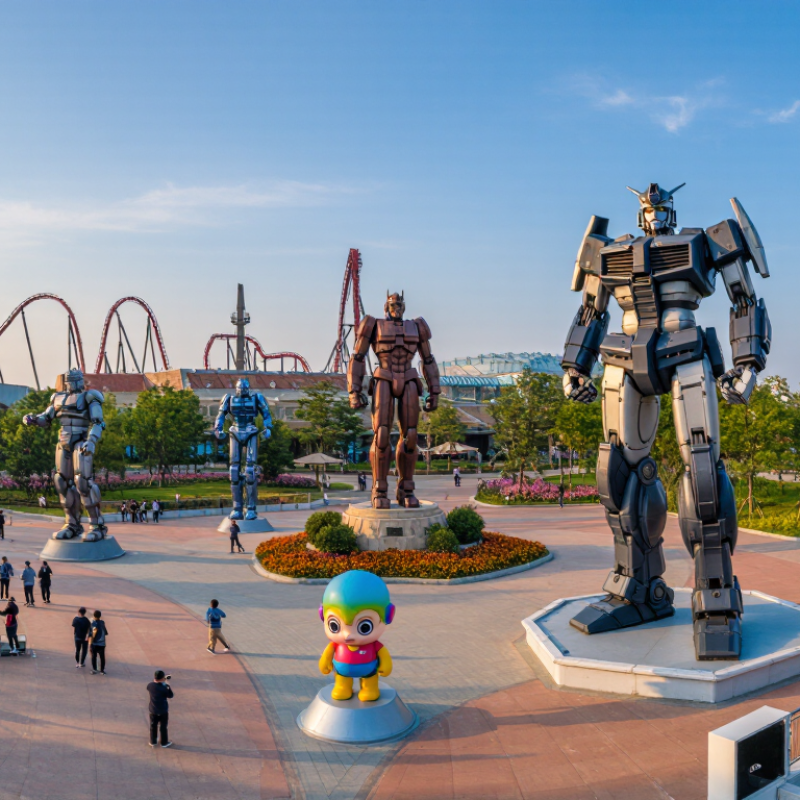
What Are the Safety Standards for Theme Park Statues?
Define Scope with ASTM F24, EN 13814, and ISO 17842 Standards
A theme park statue needs a clear safety classification before design begins. A fixed decorative figure may fall outside ride-specific requirements. However, climbable surfaces, moving parts, lighting systems, or nearby queues can change its risk profile. ASTM F24 provides a useful framework for amusement ride and device safety. Its relevant practices may address design, fabrication, quality control, inspection, and operation. The exact document depends on the statue’s function and exposure.
EN 13814 focuses on the safety of amusement rides and devices, including structural integrity, access, restraint risks, and maintenance controls. ISO 17842 offers an international framework for design, manufacture, operation, inspection, and maintenance. These standards should not be treated as automatic certification. Local building, electrical, fire, and accessibility requirements may also apply. A competent engineer should review drawings, anchor details, fall zones, material data, and inspection records. Small gaps matter.
Tips: Define the statue’s use, location, height, materials, and contact points in writing. Photograph hidden anchors before finishes cover them. Test accessible surfaces for sharp edges, entrapment points, heat, and unexpected movement. Keep revision-controlled records. In practice, a beautiful form can hide a weak connection. That deserves a second review. A checklist helps, but it cannot replace professional judgment or site-specific testing.
Review it before design begins. A fixed figure may have limited risks, but climbing surfaces or moving parts change its classification. Nearby queues, lighting, and access routes also matter. Small gaps matter.
Evaluate structure, materials, anchors, access, fire behavior, maintenance, and visitor movement. Include height, location, contact points, and nearby fall zones. A competent engineer should review the drawings and site conditions.
No. Standards provide guidance and testing frameworks, not automatic approval. Local building, electrical, fire, and accessibility rules may also apply. The final decision needs site-specific professional judgment.
Record material data, anchor details, coating systems, test reports, and inspection procedures. Photograph hidden anchors before decorative finishes cover them. Keep revision-controlled records. Memories are unreliable.
Check flame spread, smoke production, and flaming droplets using the required classification system. Test results are not automatically interchangeable between different standards. The final installation can change performance.
Match the coating system to moisture, coastal air, mist effects, or industrial exposure. Inspect coating thickness, welds, drainage paths, and hidden fasteners. Water often collects inside small joints. Recheck after seasonal operation.
Remove practical footholds, ledges, and climbable gaps where possible. Use suitable guardrails around queues, drops, ride envelopes, and maintenance areas. Keep benches and planters outside protected clearance zones.
Walk the area like a distracted visitor. Check sightlines, stroller paths, backpacks, cameras, gates, and unexpected reach points. Measure barriers before opening. Reinspect after landscaping or queue changes. Perfect drawings can meet imperfect crowds.
What are the safety standards for theme park statues? They are a structured set of engineering, material, access-control, and maintenance requirements designed to protect visitors and staff. The process begins by defining the statue’s scope, location, use, and environmental conditions under recognized amusement-ride and structure guidance. Engineers then calculate wind, seismic, crowd, impact, and other applicable loads using established structural data. Materials should be selected for strength, durability, fire performance, weather resistance, and corrosion protection, with suitable coatings and inspection criteria for the site.
Visitor interaction must also be controlled through safe clearances, stable barriers, guardrails, and carefully planned circulation routes. Before opening, the statue should undergo documented design reviews, installation checks, load or stability testing, and hazard assessments. Afterward, risk-based inspection records should track condition, defects, repairs, cleaning, and scheduled maintenance. This documented approach helps ensure that decorative statues remain stable, accessible, and safe throughout their service life.

 Stora Decor