Transporting large fiberglass statues requires expert knowledge and careful planning. Industry specialist, John Mitchell, emphasizes, "Safety is key when moving these unique sculptures." Understanding how to move and transport large fiberglass statues safely is essential for preserving their integrity and preventing damage.
The process begins with proper assessment. Evaluate the statue's size, weight, and shape. Use appropriate equipment to prevent mishaps. Relying on insufficient tools can lead to accidents. For instance, choosing inadequate straps or trolleys could cause serious issues. Having a skilled team on hand is vital. Their experience ensures a smoother operation.
It's also important to consider the route. Is there enough space? Are there any obstacles? These factors play a significant role in safe transportation. Sometimes, unexpected challenges arise. A last-minute obstacle might require quick thinking and alternative plans. Reflecting on past experiences helps improve future transports. Each move provides lessons that enhance safety and efficiency.
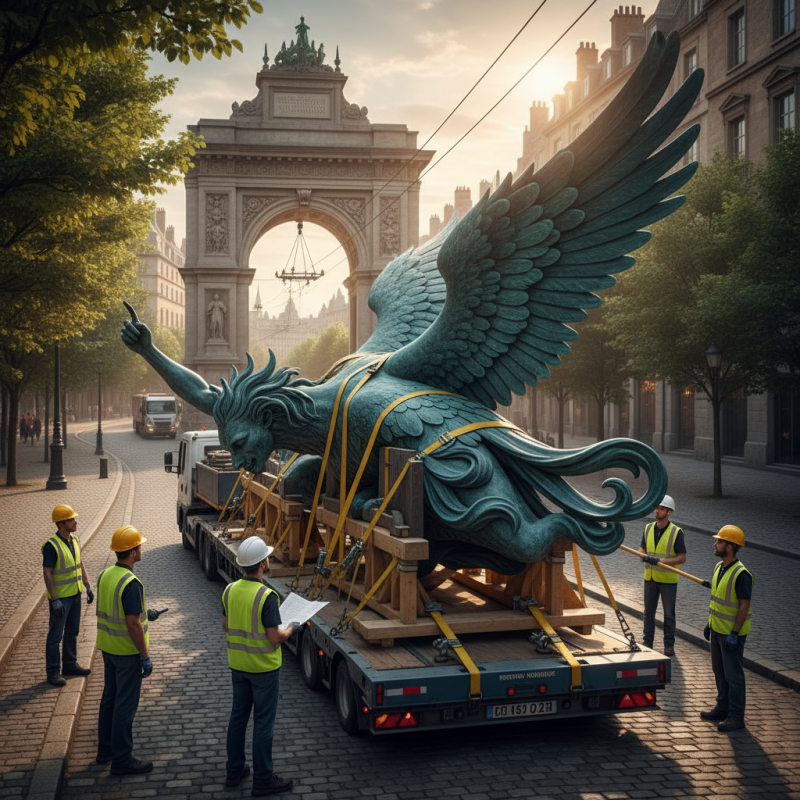
Transporting large fiberglass statues safely requires the right equipment. Choosing the appropriate tools can prevent damage. According to industry reports, improper handling accounts for 30% of transport-related issues. This highlights the need for effective planning and equipment selection.
When transporting fiberglass statues, consider using padded crates. These provide cushioning and support during transit. Additionally, use straps to secure the statue within the crate. This minimizes movement, reducing the risk of chipping or cracking. A study indicated that 70% of damages occur during transit due to inadequate securing methods.
**Tip:** Always measure the dimensions of the statue and transport vehicle. This ensures a proper fit.
Another essential aspect is using cranes or hoists. They help in safely lifting heavy statues without risking personal injury. Ensure that the equipment you choose has a suitable weight capacity. Many experts suggest a 25% safety margin above the statue's weight.
**Tip:** Regularly inspect your equipment for wear and tear. This ensures reliability during transportation.
Transporting fiberglass statues is not just about speed; it’s about careful preparation and the right choice of tools. Neglecting these aspects can lead to costly repairs and project delays.
Preparing large fiberglass sculptures for transportation requires careful planning.
Begin by assessing the statue's size and weight. Measure dimensions accurately to ensure
proper transportation methods. Inspect the sculpture for any existing damage. If there are
cracks or loose pieces, it’s vital
to repair them beforehand. These minor issues can worsen during transit, leading to
significant damage.
Next, secure the statue with protective materials.
Wrap it in a thick layer of bubble wrap or foam padding, focusing on vulnerable
areas. Use sturdy crates or wooden frames
for added support. Ensure that the statue fits snugly in its container to prevent movement during transport.
It’s important to consider the route and any potential obstacles, like low bridges or tight turns.
Finally, think about the unloading process. The method should be clear and safe.
Having a plan helps prevent accidents that could harm the sculpture or your team. Reflecting
on past experiences can improve future transportation efforts. Remember, preparation makes a significant difference
in achieving successful transportation. Each step counts in ensuring that large fiberglass statues
arrive intact and in good condition.
Transporting large fiberglass statues requires careful planning and execution. The first step is to choose the right packaging materials. Bubble wrap or foam padding can provide excellent cushioning. Use sturdy crates to protect the statues from external impacts. The importance of proper wrapping cannot be overstated. An insufficiently secured statue can suffer significant damage during transit.
Securing the statue inside the vehicle is also crucial. Straps should be used to anchor the statue firmly. Ensure the straps are tight but not damaging. A balance between security and protection is essential. It is common to underestimate how much movement can occur during transport. Check the positioning multiple times. A slight adjustment can enhance stability.
Regular inspections during transit help minimize risks. Stop periodically to verify that everything is secure. It’s easy to overlook small shifts that can affect the statue’s safety. Remember, fiberglass can crack if stressed improperly. Always have a toolkit handy. Being prepared for unexpected issues is vital. Reflection on past transports may reveal areas for improvement. Each transfer offers a learning opportunity; embrace it.
Loading and unloading large fiberglass statues requires careful planning. A strong team is essential for ensuring safety. Each member should understand their role. Proper communication can prevent accidents. Use clear signals or hand gestures to coordinate movements.
Consider using a sturdy forklift or a specialized lifting device. Ensure it has enough capacity for the statue's weight. Protect the statue with padding during loading. This reduces the risk of scratches. When unloading, place the statue on a stable surface. Uneven ground can lead to accidents. Always check the surroundings before moving the statue.
Reflect on past experiences with loading and unloading. Did the team communicate effectively? Were there unexpected challenges? Learning from these situations improves future processes. It's essential to evaluate each transport for better efficiency and safety. Continued practice and awareness lead to expertise in handling large fiberglass statues.
Transportation of large fiberglass statues requires meticulous care. Post-transportation inspection plays a crucial role in ensuring the longevity and integrity of these artistic pieces. According to a report by the National Association of Artists and Modelmakers, proper inspection techniques can reduce damage by up to 50%. After transport, take a close look at the surface. Check for cracks, chips, or discoloration. These often occur due to vibrations during transit.
After the visual inspection, maintenance is essential. Apply a protective wax to the surface at least twice a year to shield against UV damage. A study from the International Fiberglass Association shows that regular conditioning can extend the life of fiberglass by an average of 30%. Document any findings during inspections. This creates a maintenance history that is useful for future reference.
Conditioning doesn’t only improve appearance; it also helps in identifying underlying issues. A slight crack can become a significant problem if not addressed promptly. Just remember, maintenance isn’t just about repairs; it’s also about preserving the artwork’s value. Reflecting on these processes can foster a deeper appreciation of the craftsmanship involved in creating fiberglass statues. Each step taken in post-transportation care influences the ultimate aesthetic and structural quality of the work.
: Use padded crates, straps, and cranes or hoists to ensure safety.
Secure the statue tightly in a crate and check positioning frequently.
Accurate measurements ensure a proper fit and reduce movement during transit.
Regularly inspect equipment and replace it if necessary to avoid risks.
Conduct a thorough inspection immediately after transport to check for damage.
Apply protective wax at least twice a year to prevent UV damage.
Reflect on past experiences and document any issues to enhance future planning.
No, even small cracks can worsen over time if not addressed promptly.
When considering how to move and transport large fiberglass statues safely, it's essential to begin with choosing the right equipment, such as robust dollies, padding materials, and straps designed for heavy loads. Preparing the sculpture involves thorough cleaning and ensuring any loose parts are secured. During transit, best practices include using customized cradles or supports to prevent shifting and damage.
Loading and unloading require careful techniques like proper lifting methods and spatial awareness to avoid accidents. After transportation, a post-inspection ensures any potential damage is addressed promptly, maintaining the integrity of the fiberglass material. By following these guidelines, you can effectively manage the complexities involved in transporting large fiberglass statues.
