When we admire outdoor sculptures, we often wonder, "What makes a sculpture 'weather-resistant'?" These artworks face various environmental challenges. Rain, extreme temperatures, and UV rays can cause damage over time. The materials chosen play a crucial role in their durability. Artists and sculptors select metals, stone, or special finishes that withstand the elements.
Weather-resistant sculptures exhibit craftsmanship and knowledge of materials. For instance, bronze has natural resistance to rust and corrosion. Stone, like granite, endures harsh conditions well. Yet, not all sculptures are created equal. Some may fade or crack under relentless sun or freezing temperatures. It's essential to evaluate how different materials respond to specific climates.
The process of creating these sculptures involves more than aesthetics. It requires a deep understanding of environmental impact. Artists must balance beauty with functionality. Even the best sculptures can face wear over time. Reflection on their longevity encourages us to appreciate their artistry even more.
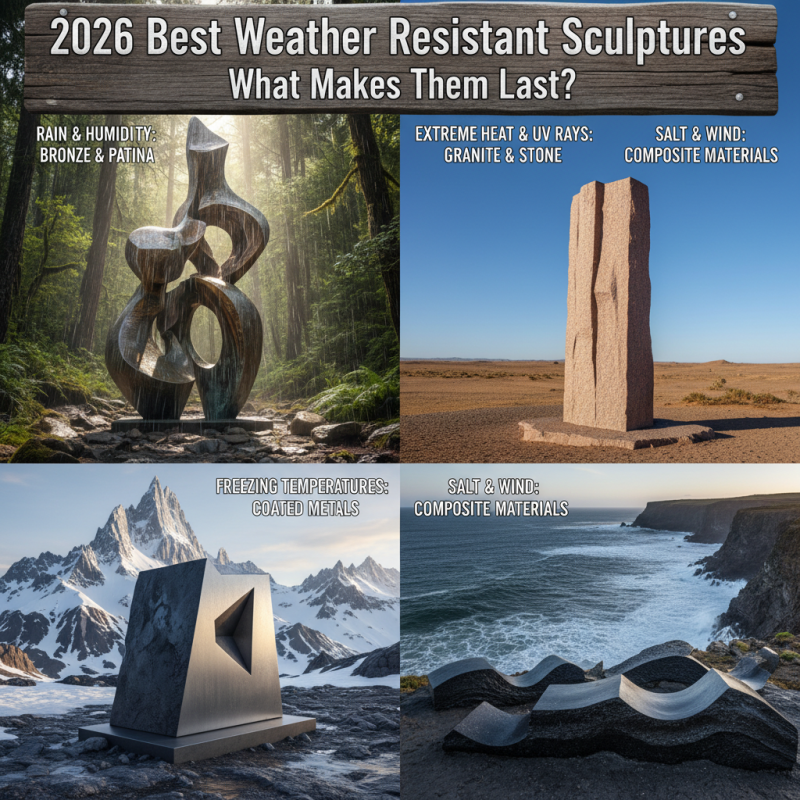
Types of Weather Resistant Materials for Sculptures
Weather-resistant sculptures endure the elements, showcasing craftsmanship and durability. Various materials contribute to their longevity. Understanding these materials helps artists and buyers make informed choices.
One popular choice is stainless steel. It resists rust and corrosion. According to a report by the International Society of Sculptors, nearly 70% of outdoor sculptures use stainless steel for its strength and aesthetic appeal. Another resilient material is fiberglass. This lightweight option can withstand harsh weather without fading. It's often reinforced, making it ideal for intricate designs.
When considering materials, think about environmental factors. UV rays, humidity, and temperature fluctuations all impact durability. Always consult with experts to determine the best material for specific climates.
Tip: Regular maintenance, such as cleaning, can extend a sculpture's life. Use mild soap and soft brushes to prevent damage.
Ceramic is another option, but it has mixed durability. While some ceramics are weather-resistant, others may crack in freezing temperatures. So, research specific types to ensure they fit your needs.
Tip: Always evaluate a sculpture’s intended location. Certain materials perform better in coastal areas, while others suit mountainous regions.
Key Design Features That Enhance Durability in Sculptures
When selecting weather-resistant sculptures, durability hinges on specific design features. One critical aspect is the choice of materials. According to a report by the American Society of Landscape Architects, materials like stainless steel and high-density polyethylene offer excellent resistance to environmental conditions. These materials withstand extreme temperatures and moisture without significant degradation.
Another significant design feature is the sculpture's finish. A protective coating can enhance longevity. Research from the National Endowment for the Arts indicates that UV-resistant finishes reduce color fading by up to 50% over time. This is essential, as exposure to rain, wind, and sunlight can lead to deterioration. While some artists prefer raw finishes for aesthetic appeal, they may not last as long outdoors.
Additionally, the sculpture's structural integrity plays a role in its resilience. A well-designed base helps mitigate the risk of tipping in high winds. A study published by the International Journal of Sculpture found that sculptures with a lower center of gravity are more stable. Artists must balance form and function, ensuring that beauty does not compromise durability.
The Role of Environment in Sculpture Longevity
Environmental factors play a crucial role in the longevity of outdoor sculptures. Sculptures face various elements, such as rain, sun, wind, and temperature fluctuations. These conditions can wear down materials over time and affect the sculpture's aesthetics. For instance, humidity can cause rust on metal pieces, while UV rays may fade paint and stone finishes. The type of material used significantly impacts how well a sculpture withstands these environmental challenges.
Consider sculptures made from weather-resistant materials like bronze or stone. They often endure extreme weather better than those crafted from less durable materials. However, even robust materials have weaknesses. Natural stone, for example, can crack under severe frost conditions. Similarly, certain metals might tarnish or corrode when exposed to moisture.
Care and maintenance can further enhance a sculpture's durability. Regular cleaning can remove dirt and pollutants that accelerate damage. Choosing suitable locations for placement is equally vital; avoiding areas with heavy foot traffic may reduce wear. While many sculptures are built to last, the surrounding environment must be a key consideration for their longevity.
Maintenance Tips for Preserving Outdoor Sculptures
Outdoor sculptures often face harsh weather conditions. Rain, sun, and snow can wear them down over time. Regular maintenance can help preserve their beauty and integrity. Rinsing sculptures with clean water removes dirt and debris. This simple step prevents the buildup of harmful substances.
Inspecting sculptures regularly is crucial. Look for cracks or any signs of damage. If you notice issues, consider applying sealants designed for outdoor materials. These products can protect against moisture and UV rays. Using the right tools can also aid in maintenance. Soft brushes can reach tight spots without causing damage.
Be mindful of the surroundings where sculptures are placed. Trees might shed leaves or branches, which can accumulate moisture. In winter, snow and ice can add extra weight. Taking time to clear these away will reduce potential harm. Remember, maintaining sculptures is an ongoing task. It requires attention and care. Observing changes in your sculptures can lead to better preservation practices over time.
2026 Best Weather Resistant Sculptures: Durability Comparison
This chart displays the durability scores of various weather-resistant sculpture materials for the year 2026. The scores range from 1 to 10, with higher scores indicating greater resistance to weathering. Material C stands out with the highest durability score, suggesting it might be the best choice for outdoor sculptures requiring lasting performance.
Examples of Iconic Weather Resistant Sculptures and Their Success Stories
Weather-resistant sculptures play a crucial role in outdoor public art. Their longevity often depends on the materials used. For instance, bronze remains one of the most popular choices for artists. Its corrosion resistance largely contributes to its durability. Studies suggest that bronze sculptures can last for centuries, even in harsh climates.
Iconic examples, like the sculpture “The Thinker,” have endured for years. It highlights the effectiveness of protective coatings and ongoing maintenance. Research indicates that sculptures exposed to diverse weather conditions need periodic inspections. This ensures the art remains intact and engaging for future generations. While many artists embrace modern materials, traditional options still offer unparalleled resilience.
However, not all weather-resistant works thrive. Some contemporary pieces struggle with ultraviolet light damage or pollution. These factors can compromise their appearance. It emphasizes the need for artists and curators to understand environmental impacts. With proper care and the right materials, weather-resistant sculptures tell stories that last far beyond the artist’s original intent.
FAQS
: Stainless steel and fiberglass are popular choices. They both offer durability and aesthetic appeal.
Rain, sun, and snow can wear down sculptures. Regular maintenance is essential for preservation.
Rinse with clean water and inspect for damage regularly. Use mild soap and soft brushes for cleaning.
No, some ceramics may crack in freezing temperatures. Research specific types for your needs.
Different materials perform better in varying climates. Coastal areas need different considerations than mountainous regions.
By using durable materials and conducting periodic inspections, artists can maintain their work’s integrity.
Environmental factors like UV rays and humidity significantly impact a sculpture's durability.
They help shield sculptures from moisture and UV rays, enhancing their lifespan and appearance.
Yes, some struggle with UV light damage and pollution, emphasizing the need for proper care.
Noticing small changes leads to better preservation practices over time, ensuring sculptures stay intact.
Conclusion
The article "2026 Best Weather Resistant Sculptures: What Makes Them Last?" delves into the essential elements that contribute to the durability of outdoor sculptures. It begins by exploring various types of weather-resistant materials, such as metals, stones, and advanced composites, which are vital in withstanding harsh environmental conditions. Key design features like appropriate drainage systems and protective coatings are also examined, revealing how they enhance a sculpture's longevity.
Moreover, the role of the environment is crucial in determining a sculpture’s lifespan; factors such as climate, exposure to elements, and local wildlife play significant roles. The article provides practical maintenance tips for art enthusiasts, ensuring that outdoor sculptures remain in excellent condition. Lastly, it highlights iconic weather-resistant sculptures and their success stories, demonstrating how these principles have been implemented effectively. Ultimately, the piece answers the question, "What makes a sculpture 'weather-resistant'?" through a comprehensive look at materials, design, environment, and care.

 Stora Decor